Working paper
- Filter byAll
- Filter byEastern Neighbourhood
- Filter byEuropean Union
- Filter byRe-Engage
- Filter byWestern Balkans
-
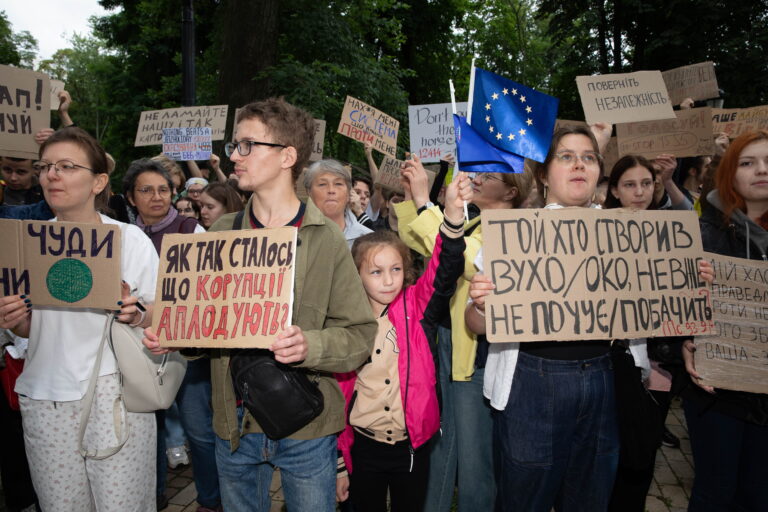
Resilience and wartime transformation: trust, geopolitics, and EU democracy promotion in Ukraine
Russia's full-scale invasion has reinforced Ukraine's civic resilience and democratic aspirations. The EU now faces the challenge of turning that public trust into lasting institutional reform.
-
Indispensable and imperfectly effective”: Addressing the deficits of EU Democracy Promotion in the Eastern Neighbourhood
The EU's democracy promotion has shifted from a challenge of passing reforms to one of making them last. To strengthen democratic resilience in its eastern neighbourhood, the bloc must invest more in trust, civic participation and local ownership.
-

EU enlargement policy and democratisation in the neighbourhood: The role of external actors
The EU's enlargement policy remains a powerful tool—but in hybrid regimes, legal reforms alone are no longer enough. Without rebuilding trust and tackling informal power structures, enlargement risks reinforcing the very systems it seeks to transform.
-
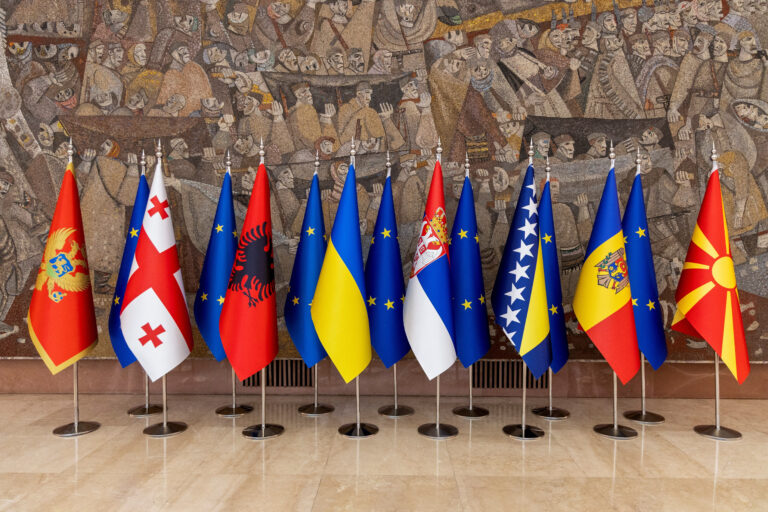
Democracy School Framework for Western Balkans
The Democracy School Framework for Albania, Bosnia and Herzegovina, and Serbia provides a comprehensive roadmap for strengthening democratic governance beyond formal institutional reform. Combining practical training with country-specific analysis, it equips political, civic and public-sector actors with the tools to tackle corruption, improve accountability, counter disinformation, foster inclusive participation and advance democratic resilience in support of long-term European integration.
-
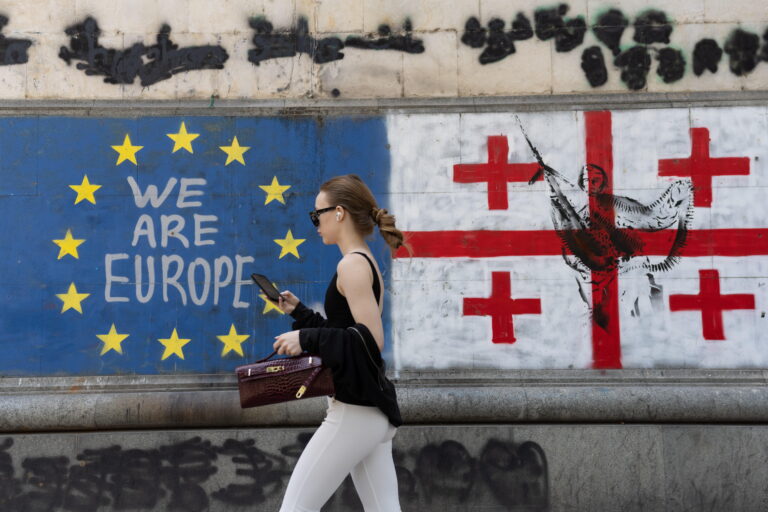
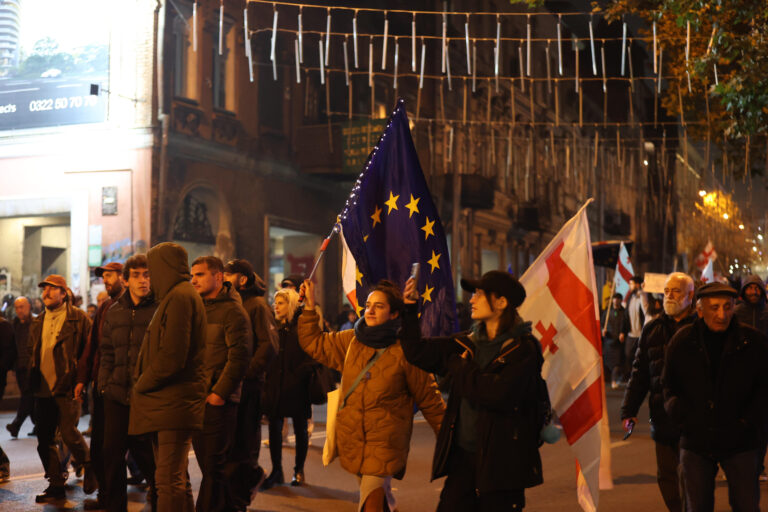
Trust and social cohesion in Georgia’s path to Europe: Navigating democratic aspirations amid authoritarian drift
Georgia’s path toward Europe is unfolding under conditions of deepening authoritarian drift. Drawing on original survey data and fieldwork, this paper examines how deficits in social and institutional trust shape democratic resilience, mediate EU democracy promotion, and condition citizens’ engagement with reform in a hybrid and geopolitically contested environment
-

EU’s democracy promotion at the test of hybridity in the Republic of Moldova
Why does democratic reform in Moldova remain fragile despite strong support for Europe? This paper argues that a gap between social and institutional trust sustains hybrid governance and shapes how reforms and EU engagement are perceived, drawing on original survey data and analysis of EU-funded projects
-
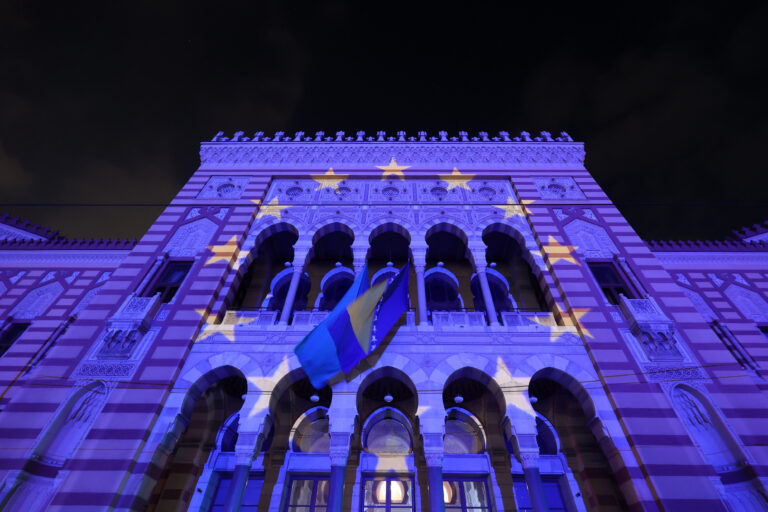
Trust, social cohesion, and EU democracy promotion in Bosnia and Herzegovina
This paper examines how persistent trust deficits and fragile social cohesion shape EU democracy promotion in Bosnia and Herzegovina. Drawing on original survey-vignette data from Sarajevo and Tuzla and process tracing of EU-funded democracy initiatives, it shows how low institutional trust, perceptions of elite capture, and weak local ownership constrain democratic resilience despite strong public support for EU integration
-

Pathways to the East, pathways to the West: Four scenarios of Eastern Europe in 2035
This paper develops four exploratory scenarios for Eastern Europe in 2035, tracing how domestic struggles between open and closed societies intersect with intensifying great-power competition. Drawing on collaborative foresight and scenario-building, it examines how differing combinations of EU engagement, Russian and Chinese influence, and societal resilience could shape the political trajectories of Ukraine, Moldova, and Georgia over the coming decade
-
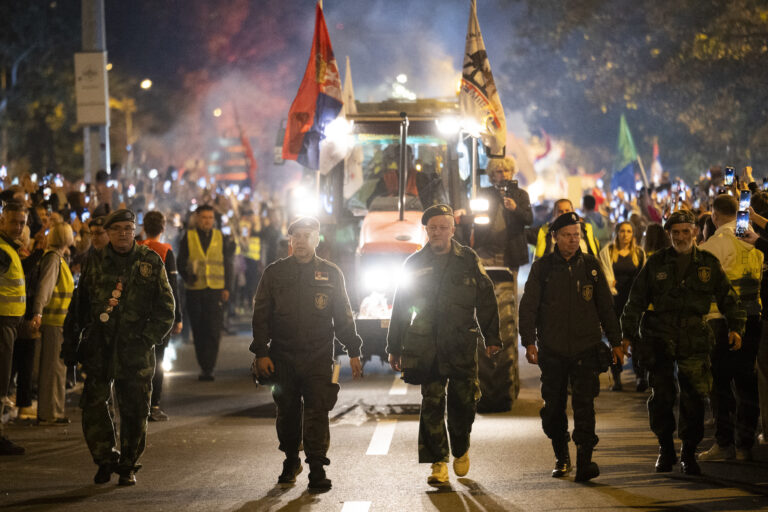
Trust, social cohesion and EU democracy promotion in times of acute political crisis – The case of Serbia
This paper examines how acute political crisis and mass civic mobilisation are reshaping trust, social cohesion, and EU democracy promotion in Serbia. Drawing on original survey-vignette data and process tracing, it shows how rising horizontal trust alongside collapsing institutional trust conditions citizens’ engagement with reform, complicates EU interventions, and exposes the limits of democracy promotion in a hybrid regime under strain
-

Fractured, integrated, at war? Five Scenarios for the geopolitical futures of Western Balkans in 2035
This paper outlines five plausible geopolitical futures for the Western Balkans by 2035 amid intensifying great-power competition and a shifting European security order. Drawing on scenario-building and collaborative foresight, it examines how EU enlargement, external actors, and domestic political dynamics could interact to shape stability, fragmentation, or renewed democratic momentum